
Manmade miracles have saved millions; let’s keep them coming
Dismantling USAID is a tremendous setback, but citizens can push back

Have you ever held a miracle in your hand? I have. It was a packet of sugar and salt that, when mixed with a liter of clean water, could save a child with diarrhea who is dying from dehydration. The solution made with it is called Oral Rehydration Therapy (ORT), and in the 1980s Unicef was distributing these packets throughout the developing world. The best part was that these miracles cost only 10 cents a pop.
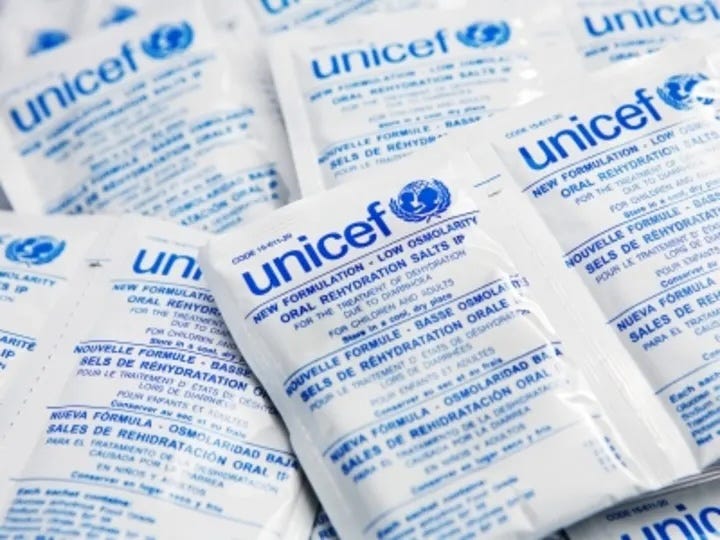
Here in America, diarrhea is seen more as an inconvenience than a life-threatening affliction. But in poorer countries, where significant portions of the population struggle to survive on $2 a day and clean water is scarce, diarrhea is a constant fact of life for kids. Dehydration can set in within hours, but administering ORT can instantly increase a child’s ability to retain fluids, preventing death.
For decades now, Unicef and other agencies have delivered another miracle, this one with a hypodermic needle — the measles vaccine. In the United States, thanks to the vaccine, measles quickly ceased to be a problem, but throughout impoverished nations in 1980, the disease remained a killer, taking 2.6 million lives annually.
All total, 40,000 children a day were dying from preventable causes back then, the operative word being “preventable.” These deaths were preventable because cost-effective treatments were available, but they weren’t getting to kids in need for lack of resources (aka money).
About this time, a volunteer advocacy group, RESULTS, was just getting started with the mission to end hunger and poverty. The acronym stands for Responsibility for Ending Starvation Using Legislation Trimtabbing and Support. You may be wondering: What the hell is a trimtab?
As RESULTS founder Sam Daley-Harris explained in every training he conducted to start a new chapter, a trimtab is a small flap on the rudder of a ship or airplane that, when it moves, starts the rudder moving. “Regarding the unwieldy ship of state, you wouldn’t jump in the water and try to push the bow in the direction you want it to go. You wouldn’t even try to push the rudder. Instead, you would find the trimtab and move that. So, what are the trimtabs you can access to move your government in the direction you want it to go?”
The trimtab we can use to move our government, one that every citizen has access to, is their members of Congress.
RESULTS volunteers, armed with the knowledge that cost-effective interventions — oral rehydration therapy, vaccines, vitamin and nutritional supplements — could save millions of children’s lives, started lobbying their congressmembers to increase funding for child survival activities that were carried out primarily through the U.S. Agency for International Development. The main target for those volunteers was the Foreign Operations Subcommittee of Appropriations, which decides how our foreign aid dollars are spent. If their representative was not on that subcommittee, the request was for them to contact the chair and ranking member of that panel and ask for an increase in child survival funding. They also generated editorial endorsements in newspapers throughout the country for child survival funding.
I’d like to point out an important fact of which most people are unaware: Foreign aid represents just 1 percent of all U.S. federal spending, but most people think it’s around 25 percent. When told that it’s just 1 percent, people think we should be allocating more. Add to that the fact that USAID funding is a fraction of the overall foreign aid budget, and life-saving aid in the developing world represents a microscopic part of U.S. government spending.
In the late ‘80s and early ‘90s, lobbying by RESULTS volunteers played a major role in increasing child survival funding from $50 million a year to $600 million a year. In the latter part of the 20th century, these volunteers also succeeded in securing money for the Global Fund to Fight AIDS, TB and Malaria. The President’s Emergency Plan for AIDS Relief (PEPFAR), credited with preventing 25 million deaths, was then initiated by President Bush during his first term, further enhancing U.S. efforts to save lives and stabilize nations wracked by numerous public health crises.
Thanks to these foreign aid programs, our nation’s stature as a leader in global health earned America much appreciation and respect around the world.
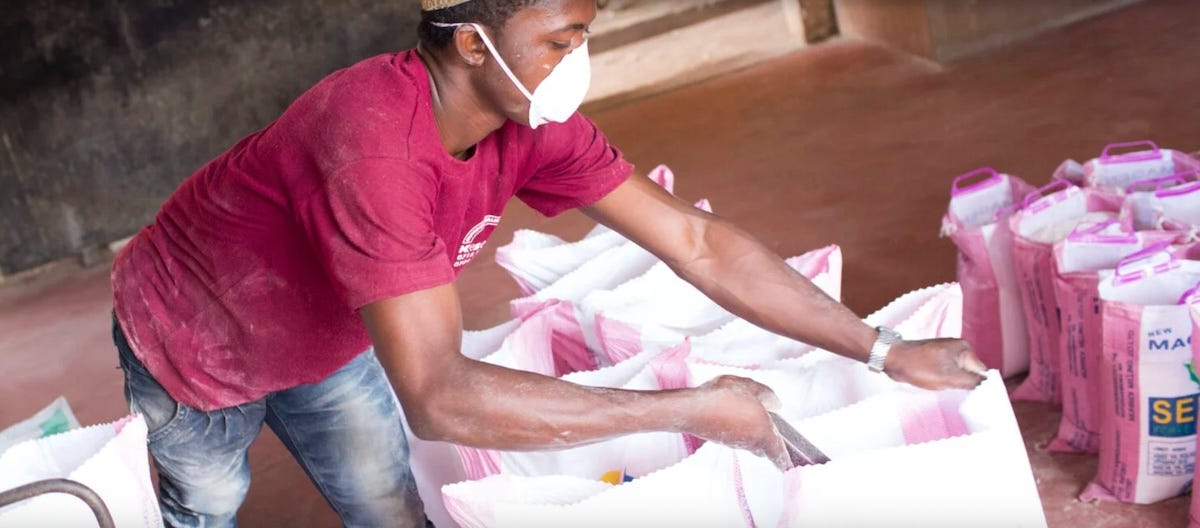
But then came the second Trump administration, with its Department of Government Efficiency (DOGE) applying a wrecking ball to USAID.
In July, NPR reported on a study estimating that 14 million lives could be lost if cuts to USAID funding remain permanent:
The Trump administration’s abrupt and steep cuts to foreign aid have halted most of USAID’s programs. To estimate how many lives could be affected by the dismantling of the agency going forward, the researchers used what they’d learned in the retrospective analysis to estimate how many preventable deaths might occur if the current USAID cuts become permanent. If that happens, they estimate that somewhere between 8 and 19 million people could die, including 4.5 million children, by 2030.
All of this, of course, is unconstitutional. Only Congress has the authority to appropriate or cut funding for government programs. Funding for USAID and all the projects it supports was authorized and appropriated when Congress passed the 2025 spending bill last year, but with no objections raised by the Republicans who control Congress, Trump is able to get away with canceling life-saving assistance.
So, what are the new priorities for foreign aid in the Trump administration? Treasury Secretary Scott Bessent said the U.S. is in talks to provide a $20 billion bailout of Argentina’s currency. Why Argentina, a developed country that does not have a high rate of poverty? Because Trump loves Argentina’s chainsaw-wielding leader, Javier Milei, who he sees as a MAGA soulmate. Milei’s presidency is on the rocks and could collapse if he’s unable to turn that nation’s economy around.
What seems like a hopeless situation, however, can be remedied using the same tools advocates used over the decades to prioritize improving global health and lifting people out of poverty.
The aforementioned Sam Dailey-Harris wrote last month that he’s seen a glimmer of hope, thanks to the relationship-building and advocacy of concerned citizens. Before Congress adjourned for the August recess, the House Appropriations Committee pushed back hard on Trump’s proposal to decimate funding for Maternal Health and Child Health, proposing it be reduced from $915 million to $85 billion. Instead, the Committee preserved full funding. Funding for the Global Fund to Fight AIDS, TB and Malaria was slated to be cut also, from $1.65 billion to $800 million, but the Committee approved $1.5 billion.
As Sam writes, “These victories didn’t materialize out of thin air…”
They were the result of years—and in many cases, decades—of relentless advocacy. Advocates and global health leaders didn’t just march or post on social media; they went inside and met with lawmakers, educated them, built bipartisan coalitions, and asked for bold, specific action. Here are two examples.
On April 28, 2025, Representatives Brian Fitzpatrick (R-PA), María Elvira Salazar (R-FL), Chrissy Houlahan (D-PA), Ami Bera (D-CA), and Mike Kelly (D-NY) led 160 members of the House in a letter urging appropriators to maintain robust FY26 funding for The Global Fund and PEPFAR.
On May 16, the same two House Republicans, joined by Representatives Sara Jacobs (D-CA) and Jim McGovern (D-MA), led a second letter—this one signed by 128 members—calling for the full funding of Maternal and Child Health programs, Gavi (The Vaccine Alliance), and nutrition initiatives.
Sam goes on to acknowledge that there is still much work left to reverse these destructive decisions on foreign aid. The Senate must pass an appropriations bill and the president must sign it. Beyond that, we must ensure that funding is spent effectively to help those who desperately need it.
“But this first step matters,” Sam says. “In an era of rising cruelty and retreat from global responsibility, the House Appropriations Committee’s action on global health is not just a policy decision. It is a statement of values—and a signal that, even now, compassion can still find a foothold in our politics.”
ADVOCACY OPPORTUNITY: If you want to add your voice to the chorus of advocates calling on Congress to restore funding for life-saving foreign aid programs, you can get started at this page on RESULTS’ website.
Bravo! Too few Americans know about this life-saving work and the role they can play in ensuring it continues.
Great message, Steve. In those earlier years, RESULTS was not battling against the inclusion of foreign health measures in the culture war portfolio as it is today. I hope that can be overcome now.