
How we can combat cognitive decline
Music offers a way to keep our brains firing on all cylinders

As we get older, one of our greatest fears is cognitive decline. Having come to terms with our mortality, the fact that we all have an expiration date, we pray that in our final years we will not descend into the personal hell of not recognizing friends and loved ones, of not knowing where we are or what we’re doing.
According to a study from Columbia University, one in ten Americans over the age of 65 suffers from dementia, and another 22 percent have mild cognitive impairment. For those who make it into their 90s, there’s a 35 percent chance of having dementia. The burden of caring for those suffering from Alzheimer’s or dementia often falls on families, and the Columbia study estimates the economic impact of these afflictions to be $257 billion annually in the U.S.
With these kinds of numbers, it’s likely that nearly all of us have had a family member who experienced serious cognitive decline. My mom, who suffered a series of mini-strokes in her later years, developed dementia a few years before she died. In addition to severe short-term memory loss, the disease changed her, making her bitter, suspicious and negative. She was not the person I knew throughout my life, and I grieved for that person long before she passed away.
There are a number of lifestyle choices people can avoid to reduce the chances of developing Alzheimer’s or dementia — smoking, heavy drinking and overeating — but breaking these harmful habits is no guarantee you will circumvent cognitive decline.
When it comes to preserving a sound mind, the word of the day is neuroplasticity. This is the brain’s ability to learn and adapt. Kendra Cherry explains in this post on verywell mind:
Neuroplasticity is the brain’s ability to change and adapt due to experience. It is an umbrella term referring to the brain’s ability to change, reorganize, or grow neural networks. This can involve functional changes due to brain damage or structural changes due to learning.
There are a number of activities in which we can engage to stimulate and improve neuroplasticity. One of those activities, probably the most enjoyable and rewarding, is music — singing or playing an instrument, especially if it is done with other people.
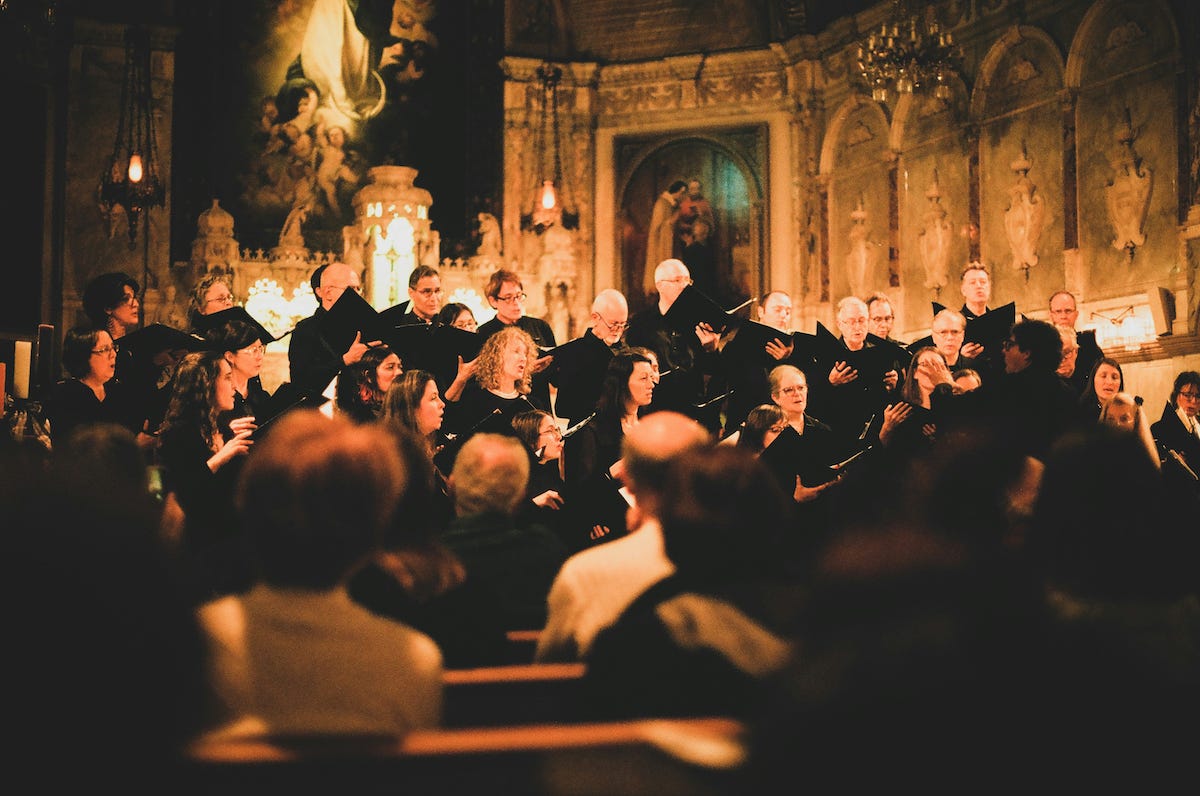
In a post on their website, the Barbershop Harmony Society noted the cognitive benefits of singing. These benefits arise from the practice of singing, particularly in a group setting, because this activity engages multiple parts of the brain at the same time, forcing these different parts to make connections that stimulate the development of that all-important neuroplasticity:
Choral singing is especially rich in what psychologists call working memory load—holding a vocal line in mind while anticipating cues, adjusting pitch, tracking lyrics, and blending with others. For older adults, working memory can become fragile over time, making multitasking more difficult. But singing reinforces it in a low-stakes, high-reward way.
Singing also reinforces selective attention. In rehearsal, singers learn to ignore some stimuli (ambient noise, others’ mistakes) and focus on the conductor’s cues or their section’s part. This sharpening of attentional control may help counteract age-related declines in sustained focus, a phenomenon noted in multiple longitudinal studies on musical engagement in older adults.
Finally, verbal fluency—one of the earliest domains to decline in some forms of cognitive aging—is supported by the rhythmic and lyrical nature of song. Memorizing and retrieving lyrics, especially in complex harmonies or non-repetitive structures, exercises the brain’s semantic and phonological networks. And because music activates emotional memory as well, older singers often retrieve lyrics faster than they can retrieve spoken language from the same era.
When I joined my church’s choir nearly 30 years ago, I wasn’t thinking that it would help my mind stay sharp when I got older. I did it because people in the pews who heard me singing told me I had a nice voice and I should join the choir. One of the first challenges I faced, one that probably inhibits others from joining a choral group, is that I couldn’t read music. All I knew was that when the dots on the page went down, I sang at a lower frequency, and when they went up, I sang at a higher pitch. I “cheated” by standing next to someone in my section (bass) who could read musical notation proficiently, and eventually I learned to recognize the intervals in the music that would get me to the next note.
What I didn’t realize was that the process of learning to read music was similar to learning a foreign language, one of the activities neurologists suggest to improve brain function. Though my brain moves a little slower than it did when I was younger — I’m definitely past my prime for competing on “Jeopardy” — nobody’s trying to confiscate my car keys. Can I chalk that up to several decades of singing in the choir? While I can’t offer scientific proof, I feel my twice-weekly singing in the choir has played a part in keeping my mind from slipping a gear or two.
In addition to delaying cognitive decline, there are other rewards from singing. There’s evidence that this activity releases dopamine, serotonin and endorphins, the “happy chemicals” that make you feel good. From Opera North: “Scientists believe that’s one of the reasons why people report being on a high during choir sessions and continuing to feel positive, uplifted and motivated afterwards.” If you’re looking to reduce stress, studies show that singing lowers adrenaline and cortisol, hormones that have a negative impact on our metabolism and immune systems when they reach excessive levels.
Another factor in cognitive decline as we grow older is isolation. A recent study showed that older adults who socialize regularly with others could delay the onset of dementia by as many as five years. Joining a choral group and singing with others provides a great way to socialize with other people on a regular basis.
“Okay, Steve, I’m sold on the benefits of singing, but there’s just one problem: I can’t sing.”
This may be true for some people, but there are many who THINK they can’t sing because they’ve never been properly trained. It’s been said that singing is, essentially, just yelling on pitch. The key, of course, is staying on pitch. Some of us have a “good ear,” allowing us to accurately replicate the notes we hear. With the proper training, most people can develop that ear and stay on pitch. Once you master the ability to avoid going flat or sharp, there are other techniques you can learn to improve the quality of your tone, like relaxing your vocal chords.
If you don’t attend a church, there are secular choral groups you can join. You can also get a group of friends together for sing-alongs. If you are, indeed, hopeless when it comes to singing, learn to play an instrument (I recommend taking lessons rather than going the self-taught route). Eventually, you’ll get to the point where you can play with other musicians.
Incorporating music into your activities, one way or another, won’t just slow down cognitive decline; it will enrich your life, elevate your mood and connect you with people you’ll want to spend time with.
I take requests.
Now that is a damn fine piece Valkano. But if you break out in song at lunch today, I’m gonna punch you! Full disclosure: Janna and I secretly karaoke.
T